

Fat is Not a Feeling
Why that matters...

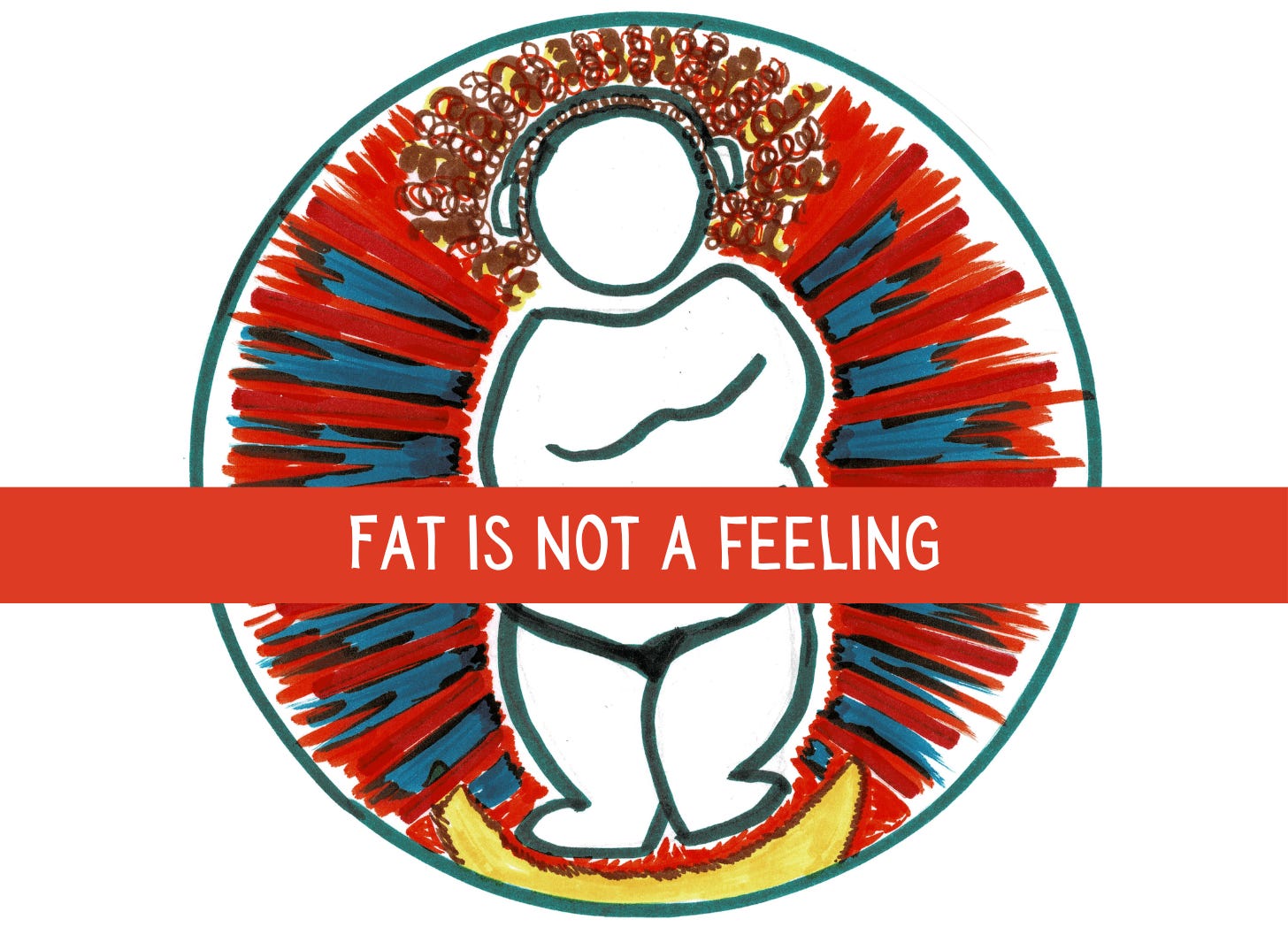
You’ve probably encountered someone who uses “fat” as though it is a feeling…or you’ve used it yourself.
Ugh, I feel so fat today!
Newsflash: Fat is not a feeling.
Fatness is an accessibility issue.
A person who is actually fat has trouble finding adequate seating, due to armrests or weight limits on chairs. This can make a venture outside of one’s own home an incredibly difficult feat. Think about it—seating is a major feature of any activity, since we humans rely on sitting no matter what size body we are in—restaurants, school, work, church, coffee shops, airplanes, cars….the list goes on and on.
A person who is actually fat has difficulty shopping for clothing in a regular store. So many retail stores that don’t specialize in fat shopping only offer through a size 14, which is ridiculous. (Insert eye roll emoji.) It’s particularly ridiculous because the average size of an American woman is a sixteen. A sixteen! It makes financial sense to supply clothing to average women, right? But the hold that diet culture hegemony has on the fashion industry is incredibly tight.
A person who is actually fat has a problem with getting adequate medical care. Yes, no matter your size, the doctor has probably encouraged you to watch your weight. But have you ever been accused of lying about what you eat because you live in a big body? Have you ever been told that any pain you’re experiencing is your fault? Has the doctor been disgusted by your body to the point of touching you less or not touching you at all during a medical visit? These are genuine barriers to care access for actually fat people.
Why it matters that fatness is not framed as a feeling:
It confuses your brain on what body marginalization looks like.
When you associate fat with a feeling, you can feel more marginalized than you actually are. I’m not saying that size discrimination doesn’t exist on a spectrum, but I know that I overlooked my size privilege when I was a size 14 because I felt so fat. My self-centered perception of fatness limited my understanding of the marginalization of mid-fats and super-fats. To be honest, my own body shame and negativity completely absorbed me and I didn’t even think of people bigger than me. Recognizing true marginalization in any area of life is vital to begin on the path of solidarity.
It associates fat with badness.
Usually what you’re intended to communicate when you say, “I feel fat,” is a negative feeling. If you’re feeling bloated or uncomfortable in your skin, I challenge you to use better words. Otherwise, you’re equating fat with bad feelings, and that’s not fair to fatness. Fatness is a lovely thing, a way for a body to exist in this world. Yes, fatness is marginalized, but there is so much beauty, softness, and tenderness when you experience the world in a fat body.
Fat is life! Literally every cell in your body functions because of the fat it contains. That deserves more than branding as a bad feeling.
Hope that elucidates some things for all of us.
Much love and peace,
Amanda
I am a grad student, hoping to earn my degree in nutrition and dietetics to become a registered dietitian. I've known from the jump that I want to be weight-neutral. Thank you for helping me build the vocabulary I know I will need as I start to interact with patients/clients who have experienced various levels of healthcare harm and discrimination because of their bodies.